Rare moose spotted

Cabin owners and visitors to the James River Retreat regularly enjoy a variety of wildlife sightings but our newest neighbours have reported a wildlife encounter that is decidedly odd.

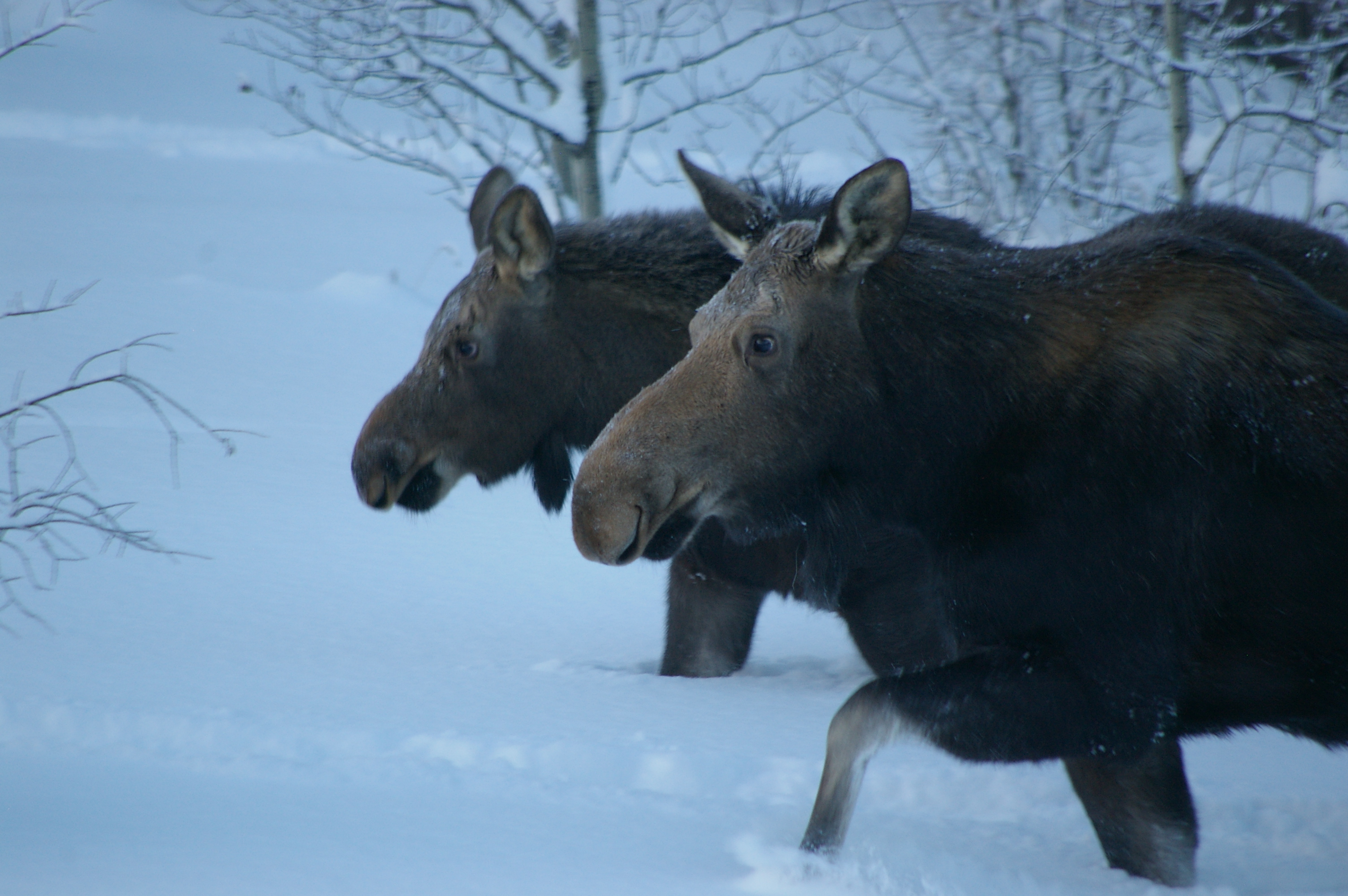
Hang out at JRR long enough and, if you’re lucky, sooner or later you’re going to see a moose. These gentle giants are frequent visitors to the Retreat, especially during the last 2 or 3 winters. In fact, we recently received a photo of two young moose wading through deep snow outside a JRR cabin window.

Submitted by Judy and Ken

Two juvenile moose, Winter 2015

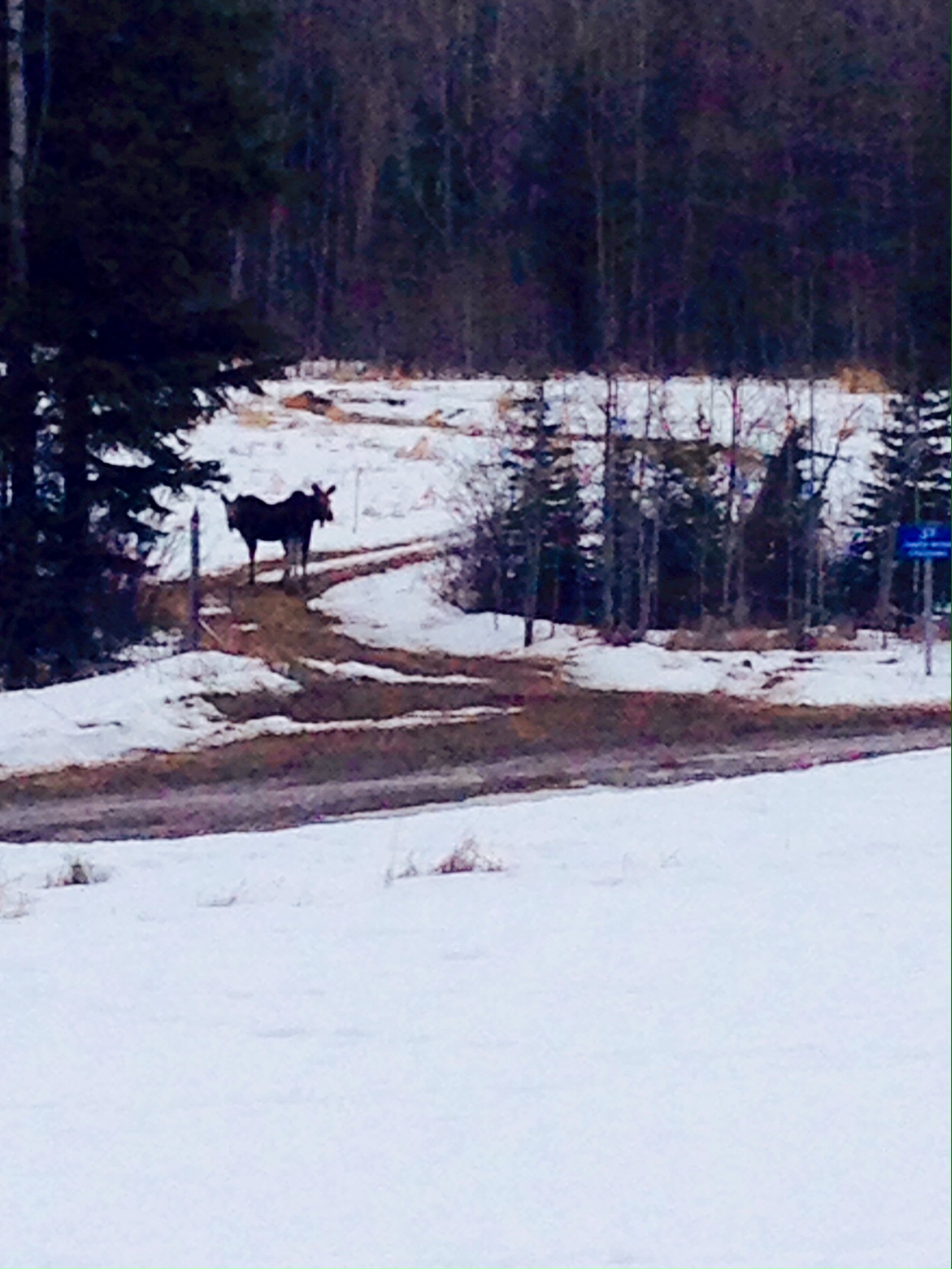
But Donna and Brad Grandview over on Lot 41 are relative newcomers and had never seen a moose in the wild before this spring. When they came face to face to face with their very first live moose, it stopped them in their tracks.

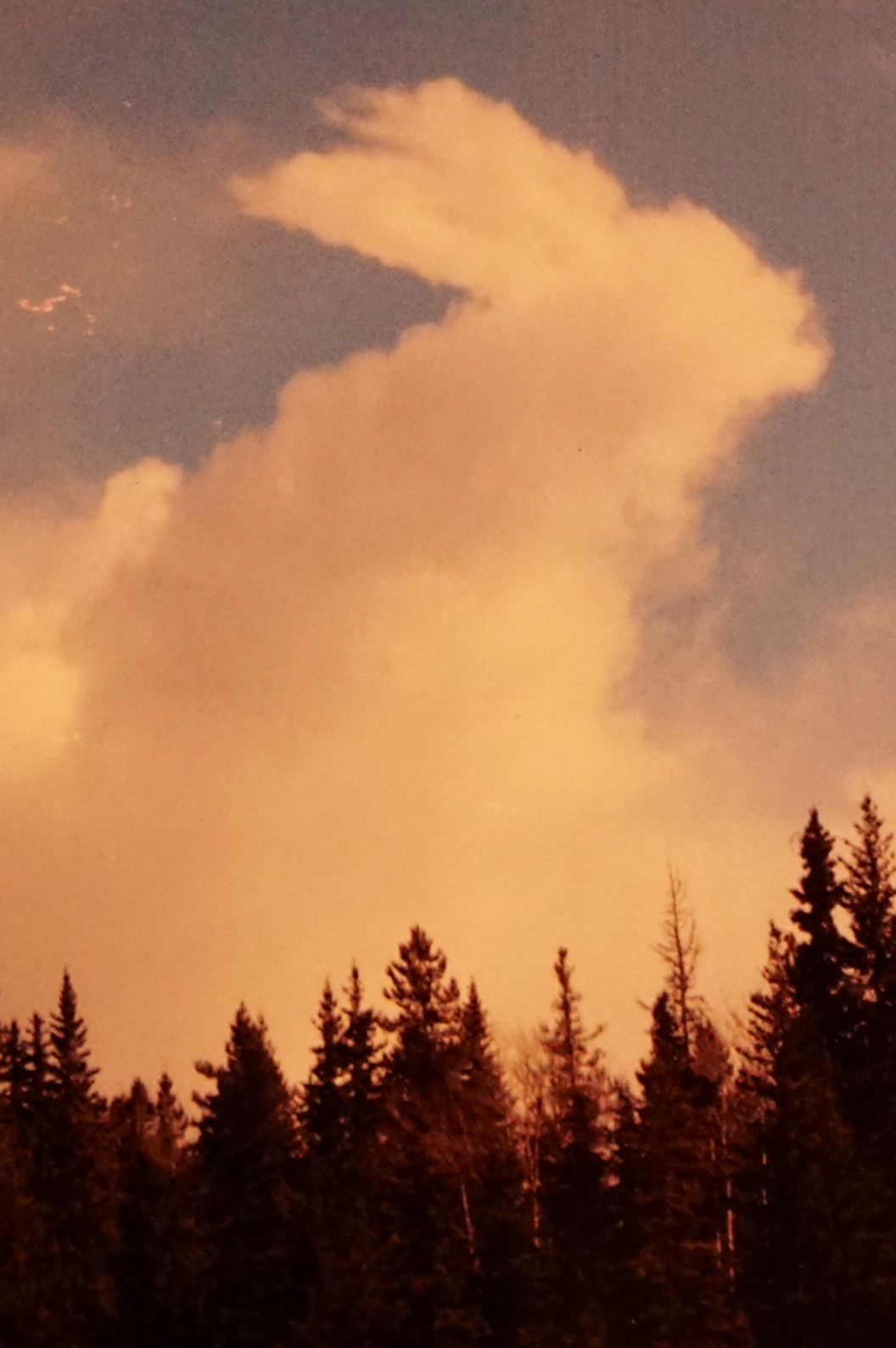
“We came around a corner and saw this thing standing in our neighbour’s driveway, just a few feet away from us” reported Brad. She went on to describe how it shuffled back and forth a few times “as if it was getting ready to take off”. It took a second for it to sink in just what was so unusual about this particular moose and why it wasn’t likely going anywhere soon. “I couldn’t believe it” said Donna “so I grabbed my phone and took this photo.” No wonder it just stood and shuffled: it couldn’t make up its mind which direction to head.

photo-19

Pushmi-pullyu moose, Spring 2015

It’s not the first outrageous springtime animal sighting at James River Retreat (see giant Easter Bunny below) but it could be the weirdest.

Giant Easter Bunny looms over JRR, Easter 2005

Giant Easter Bunny looms over JRR, Easter 2005

Embrace the dark side with your outdoor lights

One of the most beautiful views available to anyone in rural Alberta comes from stepping outside on a dark sky night and looking up at thousands of stars and the arc of the Milky Way. In cities and towns across Alberta, light pollution and trespass make a dark sky experience more and more rare. By becoming more mindful of the effect of light trespass* on our neighbours’ houses and cabins and taking three simple steps to reduce it, we can contribute to a better night sky viewing opportunity for everyone at James River Retreat.

  • When outdoors after dark, keep the use of artificial lights to a minimum. Do your exterior lights need to be on or is it just habit? They may interfere with your neighbour’s enjoyment of time away from the hustle and lights of the city and the glow of your campfire may be all that’s needed for your friends and family to enjoy the evening.
  • When exterior lights are needed, choose fixtures that limit light trespass as a courtesy to your neighbours. Use the lowest watt bulbs that will get the job done and covered fixtures that direct the light precisely where it needs to go be effective. It’s the neighbourly thing to do and it’s a requirement of our James River Retreat Design Guidelines (see below). Check out Good Neighbour Outdoor Lighting, a great reference for choosing appropriate outdoor fixtures.
  • When tucked inside your house or cabin for the night, turn off exterior lights and unnecessary interior lights. Maybe even consider drawing curtains on windows that spill particularly bright light in the direction of your neighbours.

Some of you may be wondering by now if all of this really necessary. Well, we all know what it’s like to step outside in the dark, switch off a flashlight and let our eyes adjust, gradually taking in more and more detail of our surroundings and the sky above us. Now imagine your neighbours doing the same but your bright cabin lights are a giant flashlight they just can’t turn off. It only takes a little bit of thinking and tinkering to preserve the dark sky experience over the James River Retreat. Tone down the lights wherever reasonable then step outside, look up and enjoy that infinite view.

————————————————-

*insufficient control of outdoor lighting to the extent that it crosses over to your neighbours’ property and affects their quality of life.

**From the James River Retreat Design Guidelines:

Outdoor lighting should provide subtle illumination for safety and highlighting of special architectural or landscape elements. In a natural setting without streetlamps even a 50-watt light source seen from an adjacent lot can become an irritating distraction.

  • Exterior fixtures must not have bright light sources.
  • Care must be taken to minimize the visibility of exterior light fixtures to neighbors; preferably choose fixtures that are opaque and shine primarily downward.

Take a book, leave a book

Q: What’s bigger than a breadbox, smaller than a cabin?

A: It’s Little Free Library and one has found its way to James River Retreat!

Our very own Little Free Library has finally made it off the porch at Lot #12 and down to a temporary perch next to the bridge. The concept is simple: take a book, leave a book. If something interests you as you wander by, feel free to pluck it from the box and curl up at your cabin for a good read. Once you’ve finished you can return it to our JRR “branch”, to another Little Free Library or simply pass it on to someone else to read. There is no obligation to leave a book in its place but next time there are books on your shelf that you’re ready to let go, know that they’ll find good homes when you drop them off at our Library. The Little Free Library now belongs to everyone at the Retreat. Please borrow from it, add to it, report any wear and tear to the Board and, above all, enjoy it.

The Library was stocked with an armload of books when it was installed earlier this month but may take some time to catch on. It’s expected that once the community gets the hang of it, the book supply may ebb and flow but it will more or less look after itself.

The Little Free Library concept originated in Madison, Wisconsin in 2009 and ours – official charter #8382 – is one of more than 15000 established worldwide. You’ll notice that the James River Retreat branch has been temporarily mounted on a sawhorse but the plan is to dig a posthole for a sturdier, more permanent installation once the ground thaws in the spring.

Home, Home on the James

This article originally ran in the Winter 2007 issue of the James River News, a newsletter produced by the JRR Condo Association from 2005-2009. 

Long before the Foothills became our winter playground, homesteaders on the James River eked out a harsh existence to claim ownership to their own piece of land. While some of us still live in the Retreat year round, most of us come here to relax on weekends, hardly pausing to consider the modern conveniences we enjoy at the end of a day’s romp in the snow, but settlers at the turn of the last century could scarcely have imagined such luxury.

Still, every now and then, Winter gives us a nudge, reminding us not to take our comfort and convenience for granted. Snowstorms can leave us without power, even stranded, at least until the snowplow arrives. Furnaces occasionally quit during the coldest months of the year and water pipes freeze solid. But no matter how irritating these problems are, help is only a phone call away. Blizzards? Freezing temperatures? Real threats to the very survival of those who staked claim to this land before us.
c126302k

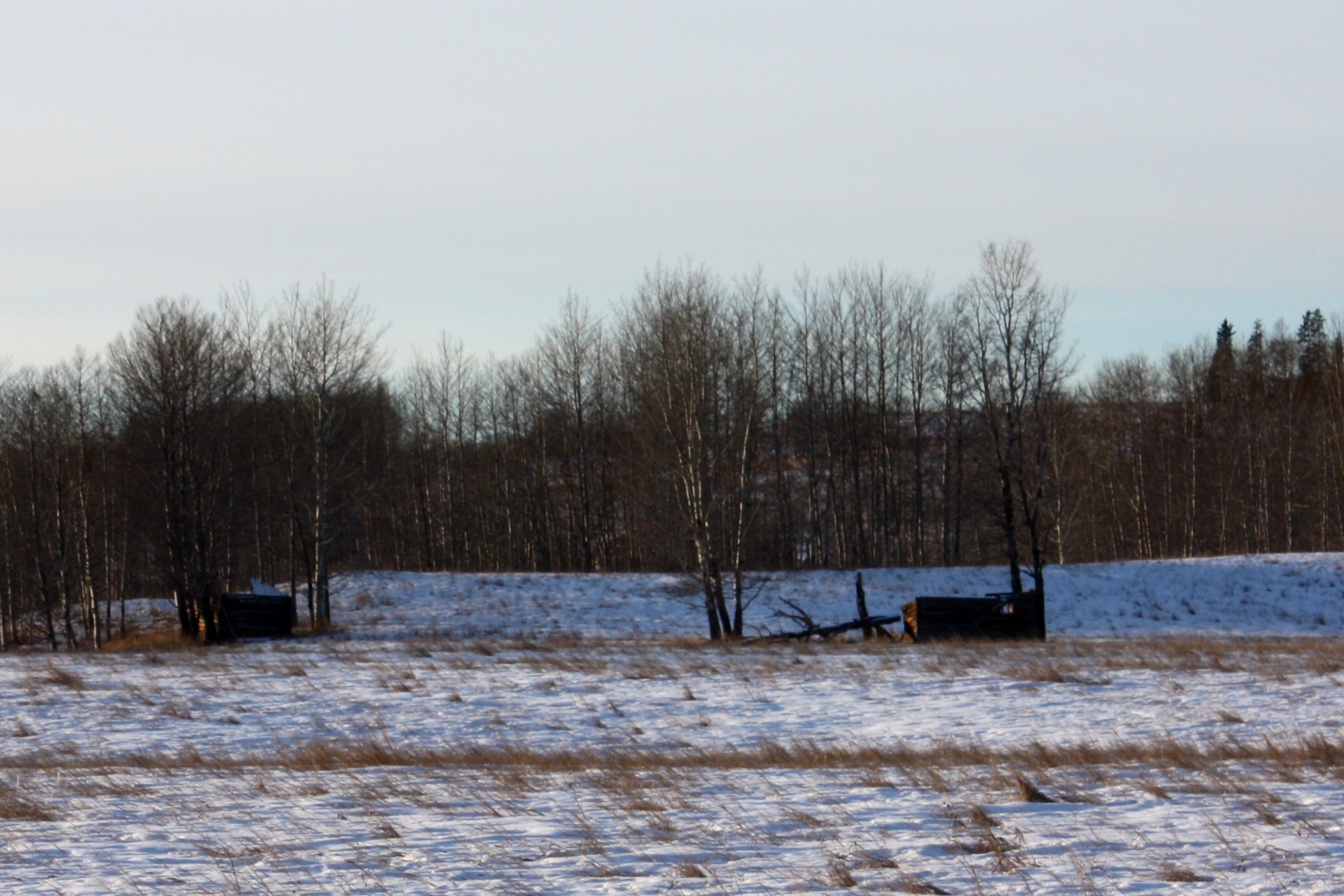
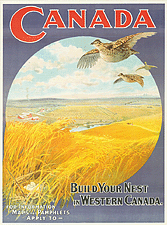
During the great influx of settlers to Western Canada in the late 1800’s and early 1900’s, our retreat on the SW corner of Section 8, Township 34, Range 6, West of the 5th Meridian, was owned by the Hudson’s Bay Company and therefore not designated for homesteading under the Dominion Lands Act. But Section 7 adjoining JRR to the west and north was parceled out as three homesteads almost 100 years ago and the remnants of one of these is still visible looking west from our fish pond.
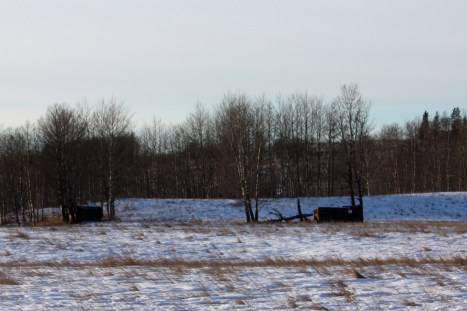
photo-17

In 1911 Paul Waitaitis, a Russian-born farmer, paid a $10 fee and set about “proving up” his homestead on SE7-34-6-W5. He cleared the required 30 acres of land and planted crops on 25 of those acres. The hard-working farmer was also obliged to build a house worth at least $300 and spend a minimum of six months a year on the land. By the time he was granted title to his homestead in 1914, he had lived on the land for three years and built a log home, barn, root cellar, chicken house and two miles of rail and wire fencing. Total value of improvements as stated on his land patent application: $850.

We don’t know the end of his story but he may have left Alberta after his James River homesteading adventures to live out his days south of the border. Perhaps one day we’ll learn and share with you what happened to Mr Waitaitis after he obtained title to his homestead. Until then, when the winter sky closes in and an icy wind makes you pull your chair a little closer to the fire, remember our neighbour sitting in a log cabin beside his own fire many winters ago.

Two other homestead parcels were granted on Section 7 in the early 1900’s:

Harold Brand Holloway of Montreal was eligible to apply for a homestead parcel under the Volunteer Bounty Act of 1908 for his service in the Boer War. Mr Holloway named Henry Sherman Gwaltney of Mound, Alberta as his substitute. Mr Gwaltney “proved up” N7 and took title in 1913. William Jennings Reid, a farmer from Bearberry, was granted title to SW7 in 1914.
 

There’s GOLD in that thar river!

This article originally ran in the Summer 2006 issue of the James River News, a newsletter produced by the JRR Condo Association from 2005-2009. 

Want to make your fortune in the James River?  It will take some back breaking work but there is gold to be found if you’re willing to work for it. But first we need to work our way upriver…

There is gold to be found in a number of rivers originating high in the foothills and mountains to the west of the James River Retreat. The sandbars of the North Saskatchewan River contain fine flour gold – pinpoint size grains – in almost economic quantities. In fact, the North Saskatchewan was actively panned and sluiced by hardbitten dreamers a hundred years ago and you’ll still find a few at it today. The Red Deer also holds flour gold, as does the James, just not quite as much. How the heck did it get there? And how can we get some?

It all began 250 million years ago when volcanic activity from Kamloops to Field injected quartz veins containing gold into the bedrock. As the bedrock broke down over eons, gold weathered out into the sand and pebble bars forming occasional “placer” deposits. Over millions of years these bars were buried several thousand metres deep, squeezed into the hard sandstones and conglomerates rocks of the Cretaceous Mannville formation and eventually uplifted in mountain building. Glaciation and endless erosion is weathering out the fine gold from those bars again. This second generation placer gold has been ground fine, traveled far, and is remarkably pure. The large surface area relative to the pinpoint size and long period of exposure has dissolved out the associated silver, copper etc that reduces native gold’s purity, so that this flour gold is about 98% pure.

Gold in the James River small0001cropped

But how do we get our hands on some? Find a big, fresh gravel bar near a high flow area of the river (lots to choose from). Shovel endless buckets of coarse gravel into a gold pan (less than $10 for a good black plastic pan at a hardware store). Swirl and swish that rock out until you have a teaspoon of blackish grit left. Save that grit. Now repeat the shovel, swirl, swish and save about 20 times until you have a good handful of grit and pan that down to a teaspoon. Guaranteed, you’ll see pinpoint pricks of buttery yellow gold warmly glowing in the sun against the black plastic of the pan. Outstanding, exhilarating, invigorating, but not too economic. An hour’s work will generate less than a few cents worth of gold. But it’s the real thing, and it’s in our very own James River.

Adapted from an article submitted by Nick Wemyss, passionate geologist, gold panner and, as a former cabin owner at James River Retreat, a part of our lore.

Fire Lookouts of Alberta (Limestone Mountain)

About 40% of wildfires within the Forest Protection Area of Alberta (which includes James River Retreat) are spotted each summer by observers stationed at 127 fire lookout sites. The lookouts are either alpine cabins located on mountaintops or steel towers built on high ground in the forest. The dedicated observers who staff these lookouts work for 30 to 180 days depending on their location and the season’s fire hazard. Each lookout operator keeps watch over an area slightly less than the size of Prince Edward Island. Complete observations of the area surrounding the lookout are made at least three times a day on low fire hazard days and almost continually during the day when the threat is high.

Picture 119

Limestone Mountain Fire Lookout, almost 50km due west of JRR, is nearest and dearest to us. Limestone Mountain can be seen from the Retreat and on a clear day with a good pair of binoculars you may be able to spot the lookout cabin at the summit.

With their spectacular views, lookouts make great day hike destinations and Limestone Mountain Lookout is no exception. For a great summer/early fall hike, check out The Passionate Hiker’s blog for a description of the road leading to the trailhead and the hike itself. If you go, remember that the lookout is the private residence of the staffer assigned to Limestone Mountain and you should keep a respectful distance unless invited to visit and sign the guestbook. And it never hurts to take along some fresh fruit or veggies and maybe even some chocolate as a gift for the dedicated soul who watches over our retreat for signs of fire.

Picture 123


Canine or Feline: can you tell the difference?

This article originally ran in the Summer 2005 issue of the James River News, a newsletter produced by the JRR Condo Association from 2005-2009. 

The James River Retreat is home to a wonderful variety of wildlife, human and otherwise.  Sightings over the years include black bears, beavers, coyotes, red foxes, deer, moose, elk, wolves and even a domestic black cat that, from a distance, had us stumped for a time. Not all animals at James River like to be seen and the fresh mud along the river bank is a great place to look for signs of our more furtive neighbours.

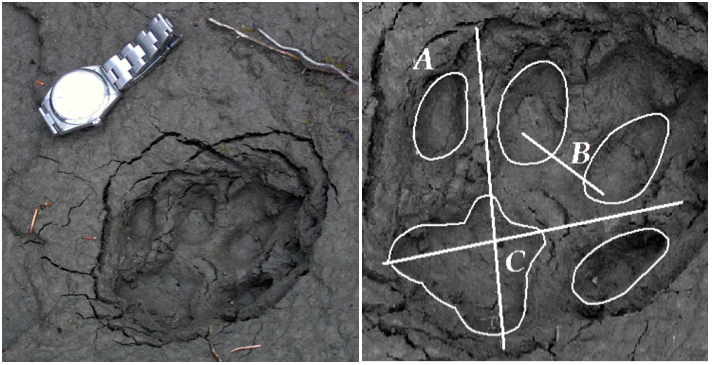
We recently came across the track pictured below a short distance upriver from the bridge.  We immediately set about trying to figure out what animal left it behind.  It’s trickier than you might think. The size of the track – slightly less than 10cm long – seemed right for a large dog, large coyote or small wolf.  But members of the dog family usually leave claw marks, especially in soft mud like this. Members of the cat family have retractable claws that rarely register in the tracks they leave behind.  Could this track have been left by a cougar, lynx or bobcat?

We went to a favourite website – Beartracker’s Animal Tracks Den – to help us solve the mystery.  This website contains a wealth of information on animal tracks of all kinds and features an article on how to tell the difference between feline and canine tracks.  We think this track was made by a cat – perhaps a small cougar – and there are three things we looked at that helped us to decide:

cougar tracks

  1. No obvious claw marks
  2. Two front toes are not lined up – one sits further forward
  3. Imaginary lines drawn along the ridges between the two pairs of outside toes intersect in the middle of the heel pad rather than at the top of it.

Looks like we may have a new neighbour, folks.  Check out the tracking website some time and see if you agree.  Maybe one day if we’re lucky, we’ll be able to add “cougar” to our list of animal sightings.  From a safe distance, of course!

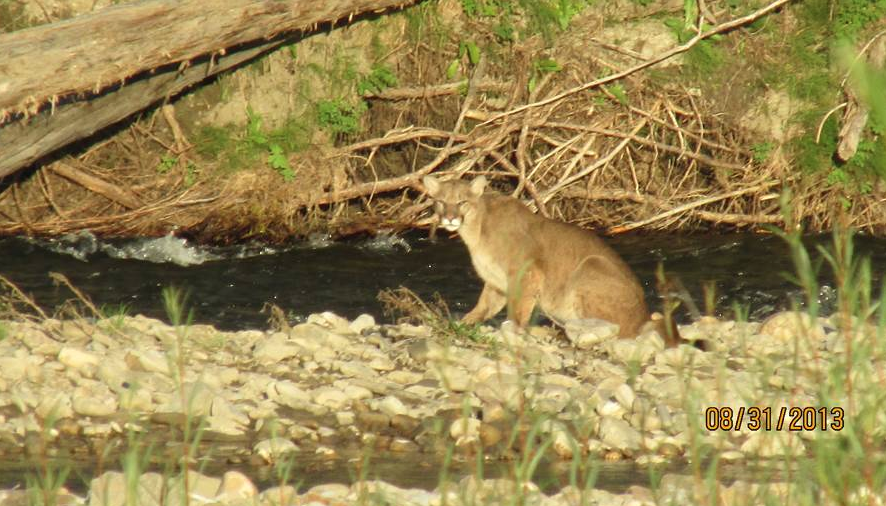
There have been multiple cougar sightings nearby and inside the Retreat since this article first appeared, including the one pictured below. The youngster was photographed by Liz and Bob Moore on the riverbank below their place last summer.

 Photo: Liz and Bob Moore

For more information on safe recreation in cougar country and signs that a cougar is in the area, visit Alberta Environment and Sustainable Resource Development’s webpage Recreation in Cougar Country or download Alberta Park’s Preventing Conflict with Wildlife: Cougars.